Archive
The Bible – God’s Living Word
 This past Sunday, I asked my students in “Sunday School” if they have heard the analogy that the Bible is like an onion. A few of them raised their hands while one of them blurted out, “Like it has different layers.”
“Exactly,” I said. I went on to explain how each time you read the Word it can say different things to you. Later that day, I was thinking of an example I could give them of this. My mind went back to a time when the Lord took me deeper into His Word. During one of my Quiet Times, the Lord took me to John 4. God used this passage to teach me several things. I thought it was a good illustration of how one can dig deep (and even deeper) into God’s Word.
John 4 recounts Jesus’ encounter with the Samaritan woman at a well. In this passage Jesus sends the Disciples into town to buy food while He spent some time alone with the woman (a social taboo in many ways). A look at this passage will show three different levels of digging into God’s Word.
Level one, which I call “the surface,” is what one can glean simply from reading the passage. On the surface, the passage is simply a conversion story. It recounts how Jesus meets a woman and through conversation leads her into the realization that He was the promised Messiah she’d been looking for. He does this by overcoming her objections and revealing Himself to her by recounting for her his life story—something only God can do.
Level two goes a little deeper. A level two reading reveals this telling to be more than just a conversion story but a lesson on how Christians are to treat non-believers if they intend to win them to Christ. First, Jesus went to where she was. If the saints are to win the lost, they have to go where the lost are. They can’t just sit in a holy huddle waiting for the lost to come to them. That just is not going to happen. Second, Jesus knew of her past and he let her know that he knew of her past, but He did not demean her for it. Jesus understood that sinners will act like sinners. It stuns me when saints are shocked when sinners act like they do. It’s their nature. It’s all they know. How ironic that saints expect sinners to act like saints while saints think it ok to act like sinners.
A level three study of the text reveals to us the heart of God. Jesus, being God, had to go through Samaria the Bible tells us. The Jews normally would go out of their way to avoid this area but Jesus made a beeline through it to meet a woman at a well during the hottest part of the day. This woman would go to that well during this time because no one else was there. At that time, there would be no leering eyes and muttered talk. This woman was looked down on even by the Samaritans. She was, in effect, the lowest of women among the lowest of society among the lowest of people groups, at least according to Jewish thinking. But God went directly to her and met her personally. Likewise, God calls us to go to the unlovely and the unlovable to demonstrate His love and concern. Who around us is considered the unlovely? Who is considered the unlovable? Who would we consider to be not worth our time or not worthy of heaven? What person or people group has God placed on our heart? Jesus went to this woman and this woman, the least of her people, became His first evangelist, introducing her people to Him while the Disciples stood idly by. God said He would take the foolishness of this world to confound the wise and the weakness to confound the strong. He did that with this woman. Like Moses, Gideon, Jeremiah, the Disciples, Paul—just to name a few—He used this woman to lead an entire city to the Lord. What Billy Graham or Mother Teresa is in our midst waiting to know of the love of God and of the salvation available through the sacrifice of Jesus Christ?
These are by far not the only applications of this passage. I’m certain that as I study it again, God will lead me to other truths. He may have led you to other trusts while you were reading this post. If so, please share so we can all grow from your insights.
Why does the reading of the Word of God produce so many applications? It does so because it is God’s Word. God is living and dynamic and so is anything He creates, including His Word, which, according to Hebrews 4:12, “is living and active and sharper than any two-edged sword, and piercing as far as the division of soul and spirit, of both joints and marrow, and able to judge the thoughts and intentions of the heart, NASB.”
My Commentary on First Timothy 1
 The epistles to Timothy are among my favorite books in the Bible. In fact, I do not believe enough teaching is done on them in churches perhaps due to the fact that most see them as being written to a pastor who how to conduct his ministry. However, there is a lot of doctrine in these letters. Not to mention, these instructions can be useful to all of us—after all we have a ministry whether paid or not, big or small. We are all charged with the responsibility of sharing the Gospel of Jesus Christ.
So since I do not hear a lot of teaching on these epistles, I thought I’d do my own.
Timothy 1:1-2
Verses 1 and 2 give us both the author, Paul, and the addressee of the letter, Timothy. Paul, again reaffirming his apostleship and stating he is an apostle “by the commandment of God our Savior and the Lord Jesus Christ, our hope.” Paul called Timothy his true son in the faith. Apparently, Timothy was led to Christ by Paul and has been a faithful disciple of Paul ever since.
To his son, Paul, opened his letter with a benediction (or blessing). He pronounced “grace, mercy, and peace” to him which only comes from God our Father and Jesus Christ, our Lord. In this benediction, he reminded Timothy that his real Father was God (who would supply all he needed) and that Jesus Christ was Lord.
1 Timothy 1:3-11
Apparently while Paul was in Ephesus there were those who were preaching other doctrine, doctrine that was contrary to the doctrine Paul had taught them. As a result, when he was called away, he urged Timothy to remain and confront them and give instruction to the congregants not to receive such teaching. These false doctrines included “fables” (untrue accounts) and “endless genealogies” (disputes on lineages of people and possibly of Christ himself). This doctrines lead to disputes that are profitless. They are designed to tear down the body and not build it up. What builds up the body—trusting in God and living in that trust—just as Abraham did.
True doctrine is to unify not divide. Division comes when people attempt to put their own spin on what God has said. But when we listen to the Spirit to understand the true meaning of the word, we will be unified. Just as it is written in Ephesians: “There is one body and one Spirit—just as you were called to the one hope that belongs to your call— 5 one Lord, one faith, one baptism, 6 one God and Father of all, who is over all and through all and in all (Ephesians 4:4-6, ESV).”
So what is the purpose of the law and doctrine: love. Many don’t believe that but love is the essence of the Christian faith. Mainly because we do no demonstrate it but Jesus said that the demonstration of our love for one another will be the way we show that we are His disciples. We are to manifest love that comes from a “pure heart, a good conscience, and a sincere faith.” When we abide in Christ, His love is manifested in and through us. Unfortunately, many church members do not demonstrate love but selfishness, self-righteousness, and jealousy. Those who manifest these behaviors are like those Paul talks about who have strayed from the faith and turned aside to things that do not edify the Body or glory Christ.
Paul said they want to be teachers of the law but they don’t understand what they teach or affirm. When I think about the churches in America, I am reminded of this statement. Many of the largest churches in America are led by people who do not teach God’s Word of repentance and salvation but a social gospel (I’m Ok, you’re OK) or a prosperity gospel (where God’s favor equals material blessings). These take scriptures out of context and do not hold the Law of God in any esteem. Instead they esteem the goodness of man and the value of worthless, earthly things. However, the Law of God was not done away with just because Christ came.
Christ came to fulfill the Law but those who are apart from Christ are still under the Law. Only those who have accepted Christ as Savior have been forgiven and are not under the Law (John 3:16-17, Romans 3:19, Galatians 4:4-5). And those who are under the Law, whether they recognize the Law or not, will be judged by the Law (Romans 2:12).
So what does Paul say about the Law and doctrine? It is good if it is properly applied. The Law is our schoolmaster. It sets the boundaries of how far we can go. To those who keep the Law, the Law means nothing. Think of a person who never drives. Does a speed limit sign mean anything to him or her? The Law is only a bully to those who refuse to keep it—the rebel, the sinner, whom Paul name: “those who kill their fathers and mothers, for murderers, for the sexually immoral and homosexuals, for kidnappers, liars, perjurers and for whatever else is contrary to the sound teaching”.
True Hidden Treasure
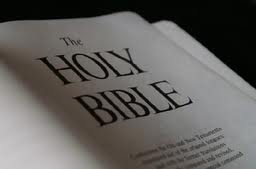
God’s Word
“Your word I have hidden in my heart, That I might not sin against You.”– Psalm 119-11
These words, penned by King David, give great evidence why he was called a man after God’s own heart. This is exactly what God wants. He wants us to treasure His Word, His Law. This was what He was trying to tell the Israelites in the Book of Exodus when He told them to bind it around your forehead and to put it on your doorposts. Though the Israelites took it literally, they missed the spiritual implications of the instruction.
What does it mean to “hide” His Word in [y]our heart? Usually when we think of hiding something, we think of putting it away for safety reasons or to protect it from prying eyes. Yet, when David said that he had hidden God’s Word in his heart, he was meaning just the opposite. He hid God Word in order that people may see that he possessed it!
Perhaps a better phrasing would be, “Your Word I have stored in my heart that I might not sin against You.” God does not want us to hide His word under or behind something. He wants us to live it so it will everyone will see. Psalm 1:2 says that the righteous person delights in the Word of God and meditates on it day and night. Why? To memorize it? No. Teachers will tell you that people who memorize things just for the purpose of memorizing them, do not really learn them and soon forgets what he memorized. On the contrary, we meditate not to memorize but internalize.
When David said he had hidden God word in his heart, he was saying that he had internalized it. He had digested it. He had made it a part of himself. It could be considered that he was saying that he had made God’s Word so much a part of him (his heart) that you could not tell it from him; thus it was ‘hidden’. They were so much alike that they were essentially blended together. One could not tell where the Word ended and David’s heart began.
Could this be said about you and God’s Word? Have you made it so much a part of your life that you no longer have to think to do it, it becomes nature? An analogy I often use is that of a cupcake. I love Hostess cupcakes (though the sugar doesn’t love me). In the middle of the cupcake is the cream filling. In the cupcake is sugar, flour, eggs, chocolate, and a host of other things. You can separate out the cream filling and still have the cupcake. You cannot separate out the sugar from the cupcake. To those of memorize the Word of God, the Word is the cream filling. To those who internalize it, the Word is the sugar.
In your life, is the Word cream filling or sugar? If it isn’t sugar, ask God to help you change that. Develop a plan to read and study God’s Word regularly. Don’t just read it; understand what it says and why it says it. Once you understand the purpose for it, applying it becomes easier.
Be transformed!
The Great Falling Away: The Apostasy of the Church
One of the lessons we can learn from the first three chapters of the Book of Revelation is that the church has cycles (or a cycle). Much like any organization, there is growth, a plateau, then a decline. After the decline there can be a rebound, another incline, or death. The church will not die. History has taught us that and Jesus has promised it. Yet, the church does have a cycle that it seems to follow.
In the beginning, when the people first come to Christ, they are on fire for Him. They worship in spirit and truth. They serve. They give generously. Then the fire starts to cool. Worldly cares seep in. People don’t read their Bibles like they once did. People don’t pray like they once did. People don’t attend church like they once did. Preachers don’t preach like they used to. Preachers and teachers don’t prepare like they used to. As Jesus said, they will have left their first love. Eventually, in the life of the believer, as in the life of the church itself, worship goes from relationship to ritual.
It is no longer about Christ. It becomes more about the process than the Person. People just go through the motions. The come; they read; they pray; they give; they leave but no real change has taken place. They had no real encounter with the Savior. They received no fuel to carry them throughout the week. Like a charcoal removed from the fire, they all soon grow cold. Now, they no longer have a faith, they have a religion.
I believe every church started out on fire for God. I believe this is true of the Catholics, the Methodists, the Presbyterians, the Baptist. But over time, their love for the Lord has started to grow cold. Their devotion, our devotion, is moving from relationship to ritual. Once we move in this direction, it won’t be long before the church is compromising with the world—embracing ecumenism in the name of peace.
In several of Paul’s letters, he speaks of the falling away or the apostasy of the church. In 1 Timothy he wrote that people would ‘depart from the faith, giving heed to deceiving spirits and doctrines of demons’. In 2 Timothy he wrote that the time is coming when people would no longer tolerate sound doctrine but will acquire for themselves teachers that teach things that appease the flesh. In 2 Thessalonians he wrote that the falling away would precede the Rapture of the Church.
What is the ‘falling away’ that Paul refers to? As one preacher once said, I don’t believe that it is some mass exodus from the church and that Jesus has to come back or there would be no Church for Him to come back for. Instead, I believe the falling away is encompassed in the words of Paul.
First, there would be a drop in church attendance. It is no secret that church attendance is on the decline. Many churches have more empty pews now than they had in the past. This is likely due to several factors. Parents stopped teaching their children the fear of the Lord. When these children grew up, church was not on their radar. Another reason is that people are too busy with the cares of the world. Many people work on Sunday because businesses are open 7 days a week. People also use Sunday as a day of rest and Saturday (the Biblical day of rest) as pleasure day. Society frowns on church and religion. It is mocked in the media. It is satire on television. It is outlawed in schools and public buildings. Of course, the biggest reason is sin. Sin draws people from God not to Him. And since sin is so prevalent and even welcomed in today’s society, church attendance suffers.
Second, people will depart from the faith. It is not that they stopped attending church. It’s just that they attend churches that don’t preach sin and repentance, hellfire and brimstone. Instead, these churches preach a social gospel—an I’m-OK-you’re-OK gospel. In this gospel, people don’t sin, they err. Yet, even without Christ, they can still live their best life yet. Regardless as to whether they are a Christian or not, everyday can still be a Friday. Others preach a prosperity gospel—a name-it-and-claim-it, call-it-and-haul-it gospel. Preachers in this gospel say all you have to do is lay your hands on it and claim it in the name of Jesus. God told Joshua that anyplace your feet trod I will give to you. Therefore, if you want a piece of land, walk its distance and claim God’s promise in the name of Jesus. If you want God’s best for your life, all you have to do is plant this faith seed and God will send you a harvest. As I said in my first book, God cannot be bribed!
Finally, mainstream religions will depart from the fundamentals of the faith. Pastors (and deacons) are committing all sorts of immoral acts and the churches (congregations) are not holding them accountable. Instead, they are standing by their pastor or priest. There are Christian denominations that actually question the infallibility (without error) of God’s Word. There are Christian faiths that actually question the deity of Christ—who actually do not believe that Christ was God. Now there are Christian denominations that are ordaining homosexual ministers—people who are living in open defiance to God’s command. First of all, God called homosexuality a sin, not me. (Lev. 20:13, Romans 1:26-27) Second, God, through Paul, told Christians to avoid people who ‘have a form of godliness but deny its power (2 Timothy 3:5). Third, Paul said that all homosexuals will have their part in the Lake of Fire (1 Cor. 6:9). Not only are they ordaining homosexuals, some are even performing civil unions for them!
In these last days, the apostasy is only going to grow. This is why it will be easier for the antichrist to come into power. What “Christians” are left behind will be so ignorant of the Word that they won’t recognize him until it is too late. On the other hand, the Bible encourages us to stay read up and prayed up. We are to work out our own soul salvation. We are to make our call and election sure. In other words, we are to stay on the straight and narrow and not to stray from God Word. We are to read it, learn it, and hide it in our hearts. We are to cling to it and stick with it no matter what the world or the church does. God’s Word is the only thing that will last. Jesus is not coming back for a congregation. He is coming back for a Bride who has made herself ready and who has remained faithful to Him.
 Cyber-Discipleship